
Introduction To Ethics Course
Introduction To Ethics Course - Each module will cover a specific topic within ethics and consists of a mixture of the following: Embarking on the vast expanse of moral philosophy, this immersive course offers a captivating exploration into the world of ethics. It covers the field in a comprehensive and accessible manner, emphasizing storytelling and examples, practical approaches and tools, and interactive assignments. • a reading assignment, with reading questions; It explores the ethical systems of plato, aristotle, confucius, epicurus, kant, utilitarianism, sartre, and feminism. This course covers the roles and responsibilities of public servants, the integrity challenges and ethical dilemmas public servants can face and how they can behave in critical situations. In this course, we will critically examine some of the answers that have been proposed to these enduring philosophical questions. There will be plenty of opportunity to engage in debate and test your own thinking. For information regarding prerequisites for this. Recognize the various goals of and approaches to ethics as a branch of philosophy. Embarking on the vast expanse of moral philosophy, this immersive course offers a captivating exploration into the world of ethics. In this introduction to ethics, we shall examine four important ethical theories, applying them to two practical questions: How can we know what is morally required of us? In this course we will ask a number of questions about such claims in order to better grasp the nature of morality. This course critically analyzes questions of value (what’s good and bad) and obligation (what’s right and wrong). Students have significant weekly reading assignments, three papers with one being used for core. While they highly value this aspect. Students will analyze texts for meaning, apply theories learned to various areas of moral concern, such as war, euthanasia, divorce, and poverty. • a reading assignment, with reading questions; It is a practical application of moral considerations and is highly relevant to modern societal dilemmas. This course covers the roles and responsibilities of public servants, the integrity challenges and ethical dilemmas public servants can face and how they can behave in critical situations. Students at liberty university are exposed to courses that introduce critical thinking about moral issues. This course critically analyzes questions of value (what’s good and bad) and obligation (what’s right and wrong).. Explore the underlying structures of everyday arguments and develop the tools to communicate effectively. It examines selected problems and topics, such as the morality of war, abortion, hunger, and poverty. Phi 107 gra introduction to ethics, fall 2021 3/13 course modules & units this course consists of 30 modules across 6 units. It is a practical application of moral considerations. We’ll investigate such topics as virtue ethics, deontology, constructivism, objectivism, relativism, consequentialism, free will, and determinism. This fully online, open access course is intended to meet the needs of teachers and students undertaking a study of introductory level ethics and moral theory. What should we make of the prevalence of moral disagreement? Explore the underlying structures of everyday arguments and. Students will analyze texts for meaning, apply theories learned to various areas of moral concern, such as war, euthanasia, divorce, and poverty. Introduction to ethics course description: Historical development the study of. We’ll investigate such topics as virtue ethics, deontology, constructivism, objectivism, relativism, consequentialism, free will, and determinism. • a reading assignment, with reading questions; It is a practical application of moral considerations and is highly relevant to modern societal dilemmas. You'll explore how biases and stereotypes influence decisions, discover the power of social norms and conformity, and examine the crucial role emotions play in ethical reasoning. This course dives deep into the psychological and social factors that shape our ethical judgments and behaviors. There. This course is an introduction to the history of the philosophical examination of ethics from ancient greece through contemporary thought in western philosophy will examined. Students will analyze texts for meaning, apply theories learned to various areas of moral concern, such as war, euthanasia, divorce, and poverty. Students at liberty university are exposed to courses that introduce critical thinking about. It covers the field in a comprehensive and accessible manner, emphasizing storytelling and examples, practical approaches and tools, and interactive assignments. Introduction to ethics, 3 luo credits. Each module will cover a specific topic within ethics and consists of a mixture of the following: This introduction to moral and political philosophy is one of the most popular courses taught at. This introduction to moral and political philosophy is one of the most popular courses taught at harvard college. This course introduces theories about the nature and foundations of moral judgments and applications to contemporary moral issues. Phi 107 gra introduction to ethics, fall 2021 3/13 course modules & units this course consists of 30 modules across 6 units. It covers. In this introduction to ethics, we shall examine four important ethical theories, applying them to two practical questions: • a reading assignment, with reading questions; This course introduces theories about the nature and foundations of moral judgments and applications to contemporary moral issues. Introduction to ethics, 3 luo credits. There will be plenty of opportunity to engage in debate and. Analyze the essential features and commitments of divine command theory, conventionalism, and egoism as applications of ethics. We’ll investigate such topics as virtue ethics, deontology, constructivism, objectivism, relativism, consequentialism, free will, and determinism. Welcome to introduction to ethics. While they highly value this aspect. The course will be offered virtually. It examines selected problems and topics, such as the morality of war, abortion, hunger, and poverty. We sometimes say that an action is morally right or wrong. Phi 107 gra introduction to ethics, fall 2021 3/13 course modules & units this course consists of 30 modules across 6 units. Explore the underlying structures of everyday arguments and develop the tools to communicate effectively. Introduction to ethics course description: This course dives deep into the psychological and social factors that shape our ethical judgments and behaviors. This course introduces theories about the nature and foundations of moral judgments and applications to contemporary moral issues. Sophia's introduction to criminal justice course explores the criminal justice system, laws, courts, policing, and correctional institutions in the united states. It covers the field in a comprehensive and accessible manner, emphasizing storytelling and examples, practical approaches and tools, and interactive assignments. Introduction to ethics, 3 luo credits. • a reading assignment, with reading questions; Welcome to introduction to ethics. Each module will cover a specific topic within ethics and consists of a mixture of the following: This course covers the roles and responsibilities of public servants, the integrity challenges and ethical dilemmas public servants can face and how they can behave in critical situations. Analyze the essential features and commitments of utilitarianism and kantian deontology as applications of ethics. Analyze the essential features and commitments of divine command theory, conventionalism, and egoism as applications of ethics.
Lecture 1. INTRODUCTION TO ETHICS. Course out line Course description
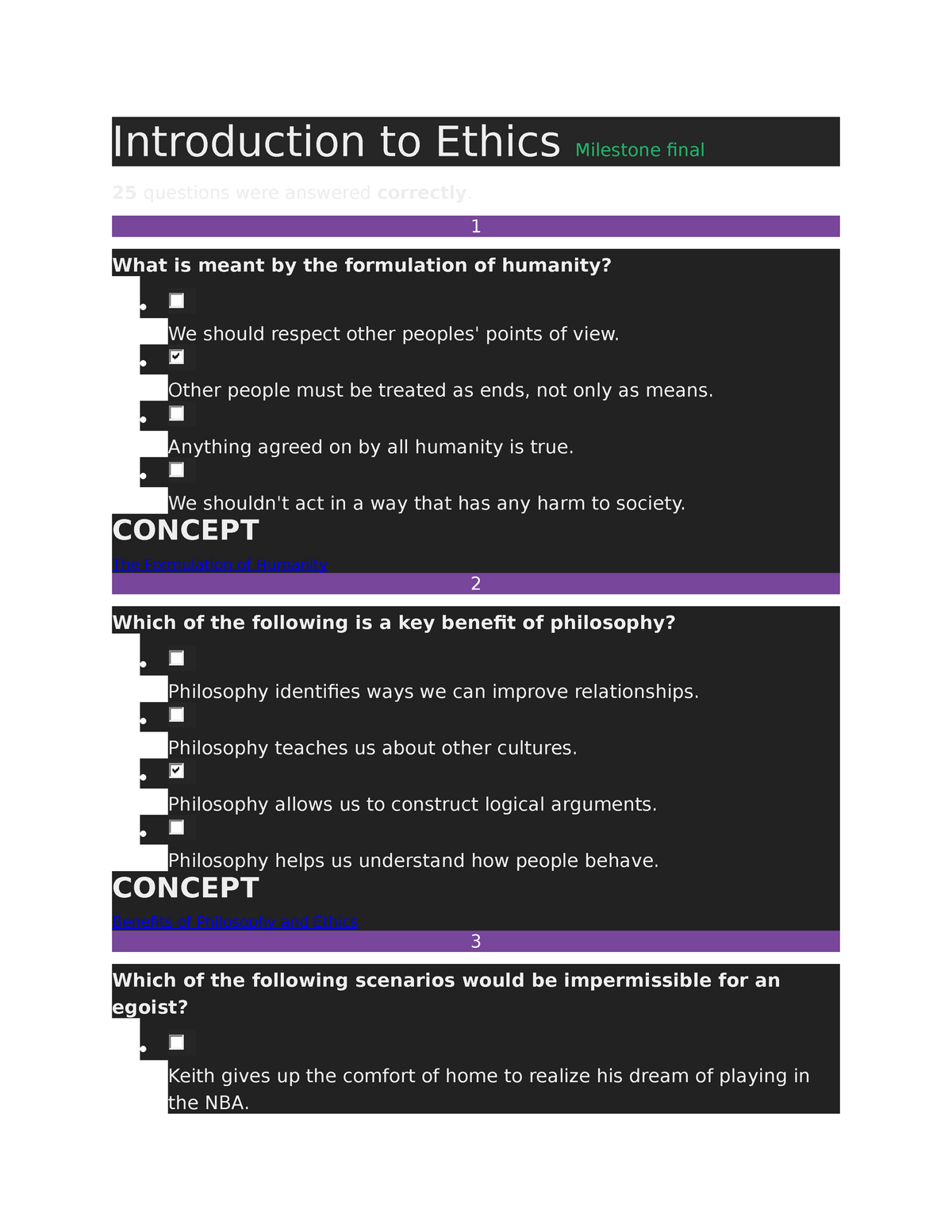
Introduction to Ethics Milestone final Studocu
Introduction To Ethics PDF Integrity Morality

Lecture 1. INTRODUCTION TO ETHICS. Course out line Course description

Introduction To Ethics Course Ethics India

Udemy style school Learn Easy
Introduction to Ethics LCT Life Changing Training Online

SOLUTION Intro to ethics course outline Studypool

SOLUTION Intro to ethics course outline Studypool
Introduction To Ethics PDF
In This Course We’ll Survey Readings In Ethics And Moral Philosophy To Understand Different Perspectives On How Moral Decisions Can Be Made.
The Rights Of Animals And Euthanasia.
Topics Cover Law, Sustainable Development, Utilitarianism, Rights, Justice, Care Ethics, Virtue Ethics, Limitations.
There Will Be Plenty Of Opportunity To Engage In Debate And Test Your Own Thinking.
Related Post:

