
True Course True Heading
True Course True Heading - The true course is 031°. If using a plotter, follow the directions on the plotter. Plus, it walks through calculating ground speed. The true course is the aircraft path over the ground referenced to true north. Magnetic heading is your direction relative to magnetic north, read from your magnetic compass. Find the crosswind component by using the wind side of the flight computer. Figuring your heading from a map is the most basic way to use a map and compass together to plot a course of travel. True heading is your direction relative to true north, or the geographic north pole. Now that you have a true course, we need to correct for winds which will give us a true heading. The aircraft's course over the ground relative to true north. True heading is true course corrected for the crosswind component. The true heading in the direction the aircraft nose is pointing referenced to true north. Once the true heading is established, the. A true course is a heading based on the direction you intend to travel. The true course is the aircraft path over the ground referenced to true north. It is often all you need to do, but sometimes you are able to better. True heading (th) is the actual direction the vessel or. This video introduces five questions to help determine how to go from true course to magnetic heading to compass heading. The true course is 031°. The difference between the two results from a crosswind, which may require you to fly a different true heading to achieve your true course. If using a plotter, follow the directions on the plotter. After determining the distance, the true course should be measured. And, i do all this. The difference between the two results from a crosswind, which may require you to fly a different true heading to achieve your true course. Given coordinates of two locations in decimal degrees, this calculator displays. This video introduces five questions to help determine how to go from true course to magnetic heading to compass heading. Magnetic heading is your direction relative to magnetic north, read from your magnetic compass. The aircraft's course over the ground relative to true north. Figuring your heading from a map is the most basic way to use a map and. True course (tc) is the planned direction of travel to reach a destination, based on geographic coordinates and navigation charts. After determining the distance, the true course should be measured. Now that you have a true course, we need to correct for winds which will give us a true heading. Magnetic heading is your direction relative to magnetic north, read. In this article, we will delve into the essential techniques for determining magnetic heading, exploring how to use it effectively in both vfr (visual flight rules) and ifr (instrument flight. The difference between the two results from a crosswind, which may require you to fly a different true heading to achieve your true course. Figuring your heading from a map. The true course is 031°. True course, often abbreviated as tc, is an essential term in aviation that refers to the actual direction of an aircraft’s path over the ground, without any adjustments for wind or. Once the true heading is established, the. Find the crosswind component by using the wind side of the flight computer. Now that you have. What is true course vs. True course (tc) is the planned direction of travel to reach a destination, based on geographic coordinates and navigation charts. Find the crosswind component by using the wind side of the flight computer. True heading is your direction relative to true north, or the geographic north pole. The difference between the two results from a. True course (tc) is the planned direction of travel to reach a destination, based on geographic coordinates and navigation charts. A true course is a heading based on the direction you intend to travel. Now that you have a true course, we need to correct for winds which will give us a true heading. And, i do all this. True. It is often all you need to do, but sometimes you are able to better. Magnetic heading is your direction relative to magnetic north, read from your magnetic compass. The difference between the two results from a crosswind, which may require you to fly a different true heading to achieve your true course. This video introduces five questions to help. In this article, we will delve into the essential techniques for determining magnetic heading, exploring how to use it effectively in both vfr (visual flight rules) and ifr (instrument flight. After determining the distance, the true course should be measured. And, i do all this. The aircraft's course over the ground relative to true north. True heading (th) is the. What is true course vs. The aircraft's course over the ground relative to true north. Plus, it walks through calculating ground speed. True heading is your direction relative to true north, or the geographic north pole. Given coordinates of two locations in decimal degrees, this calculator displays constant azimuth, distance and compass points for different compass roses. True heading is true course corrected for the crosswind component. True course is measured with a navigation plotter and a sectional map. After determining the distance, the true course should be measured. Plus, it walks through calculating ground speed. Now that you have a true course, we need to correct for winds which will give us a true heading. Find the crosswind component by using the wind side of the flight computer. If using a plotter, follow the directions on the plotter. A true heading is the course corrected for. Given coordinates of two locations in decimal degrees, this calculator displays constant azimuth, distance and compass points for different compass roses. True heading is your direction relative to true north, or the geographic north pole. And, i do all this. A true course is a heading based on the direction you intend to travel. The true course is 031°. The true course is the aircraft path over the ground referenced to true north. In this article, we will delve into the essential techniques for determining magnetic heading, exploring how to use it effectively in both vfr (visual flight rules) and ifr (instrument flight. Once the true heading is established, the.
HOW TO SOLVE TRUE COURSE YouTube
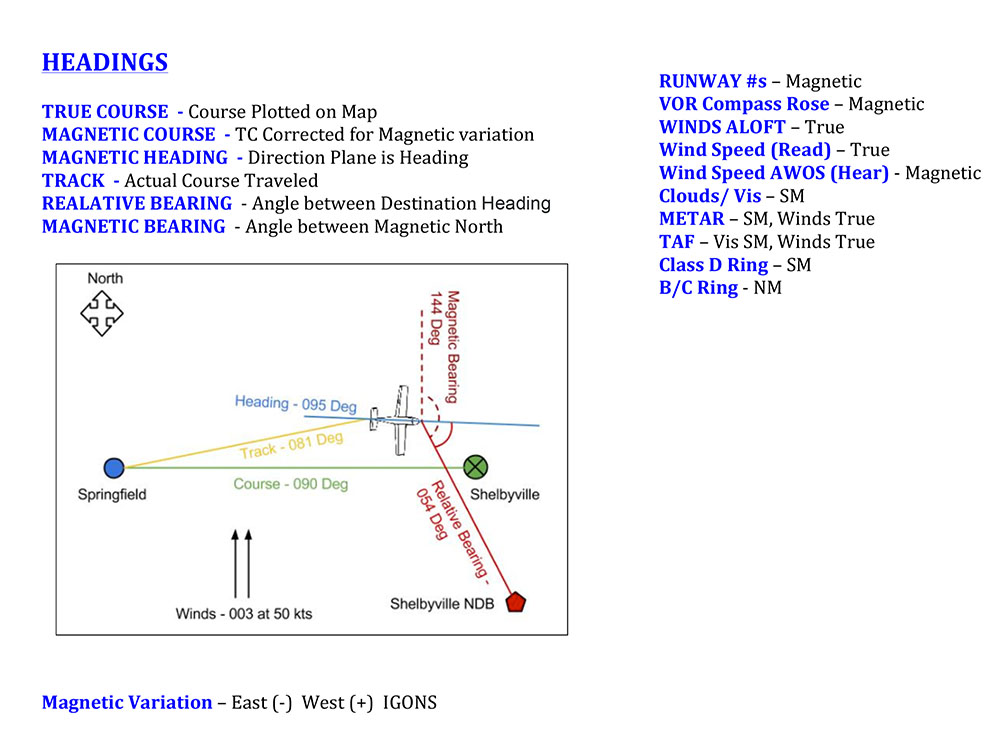
Heading, Course, Bearing, True Blonds In Aviation
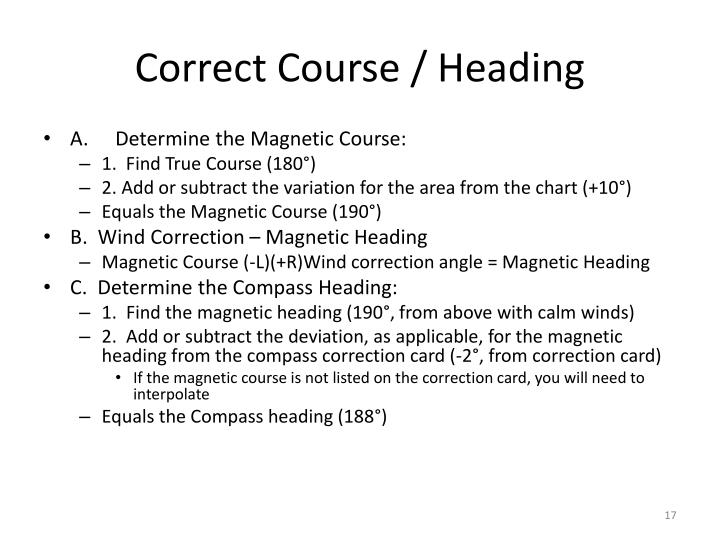
PPT COMPASS TURNS PowerPoint Presentation ID1618660

Enriching an NMEA Stream
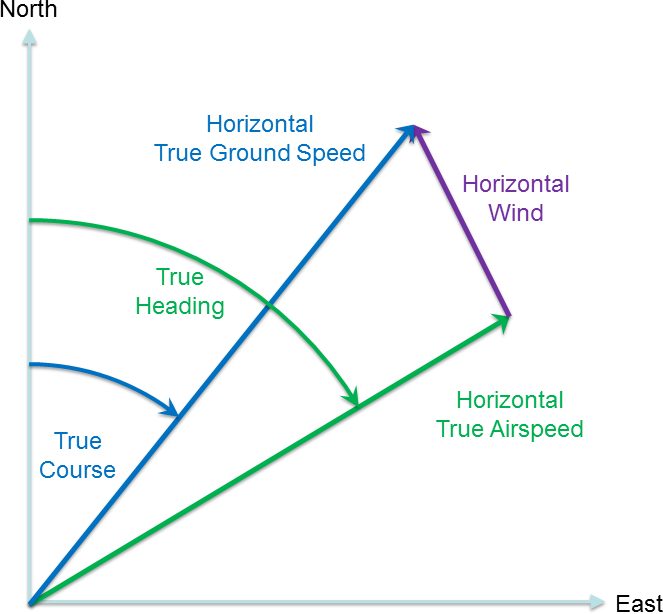
Aircraft Maneuvers DME Component Libraries for 2025 r1
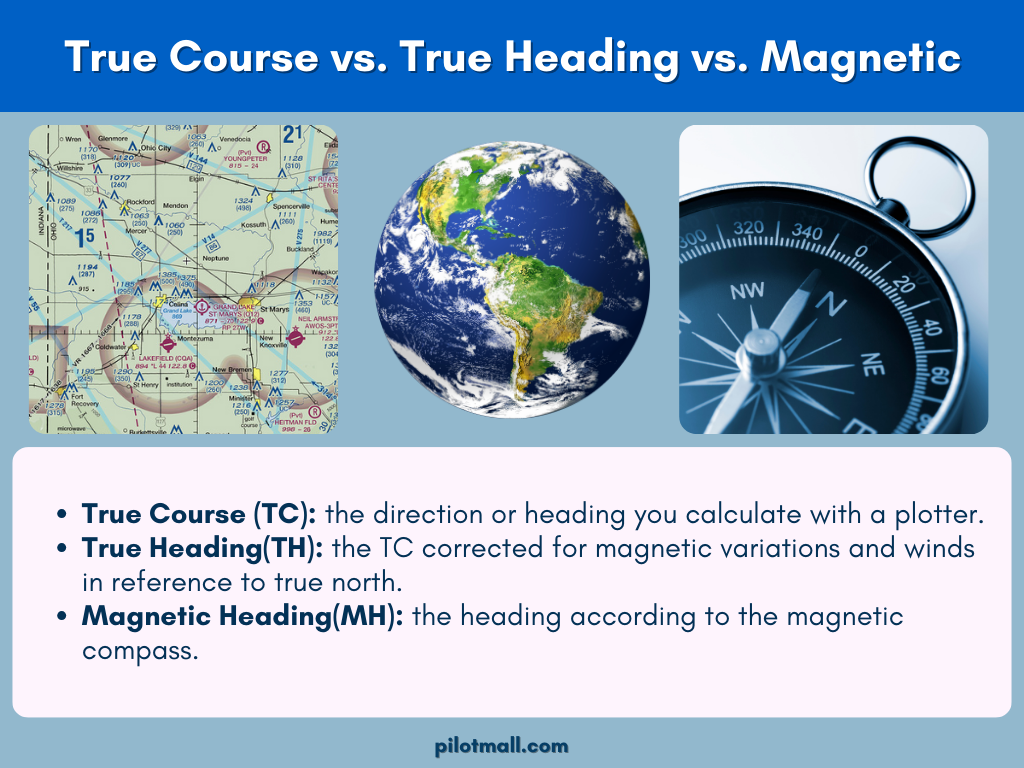
True Course vs True Heading vs (How Are They Different?)
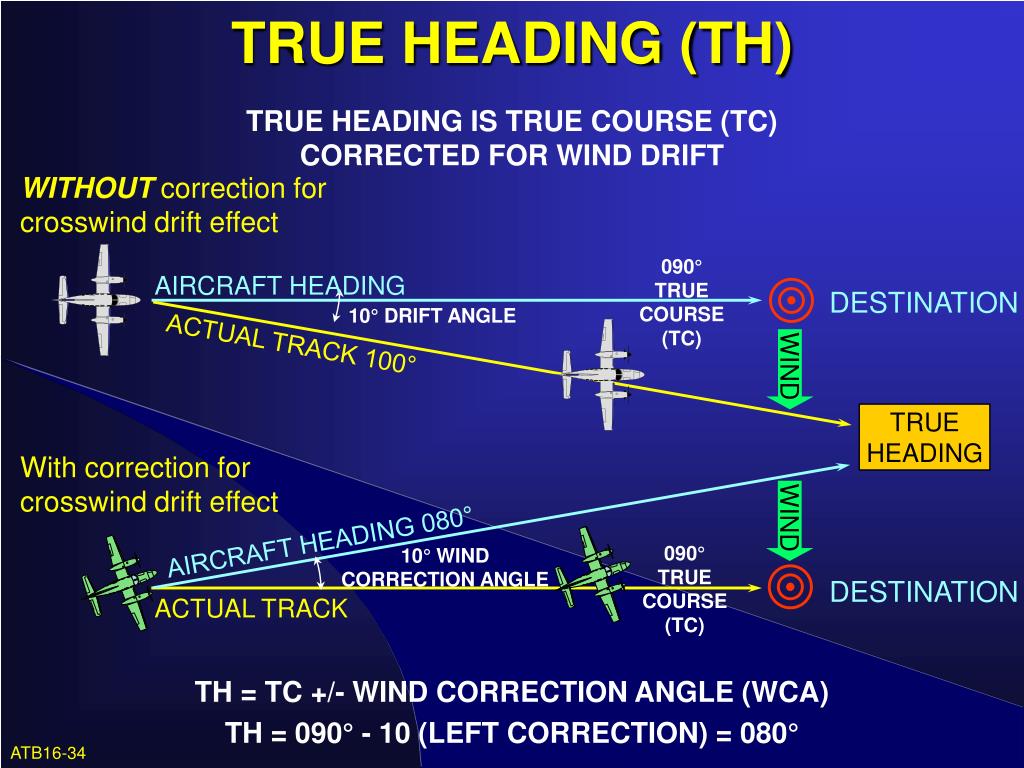
PPT Let’s see… Shall I navigate today by... PowerPoint Presentation
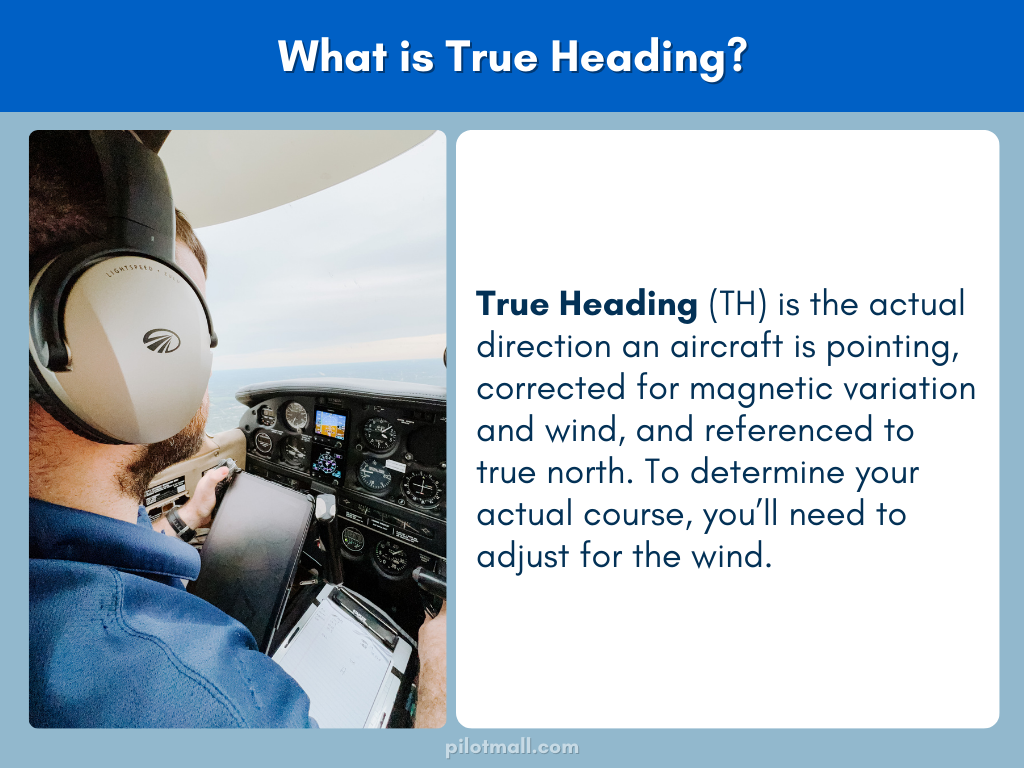
True Course vs True Heading vs (How Are They Different?)
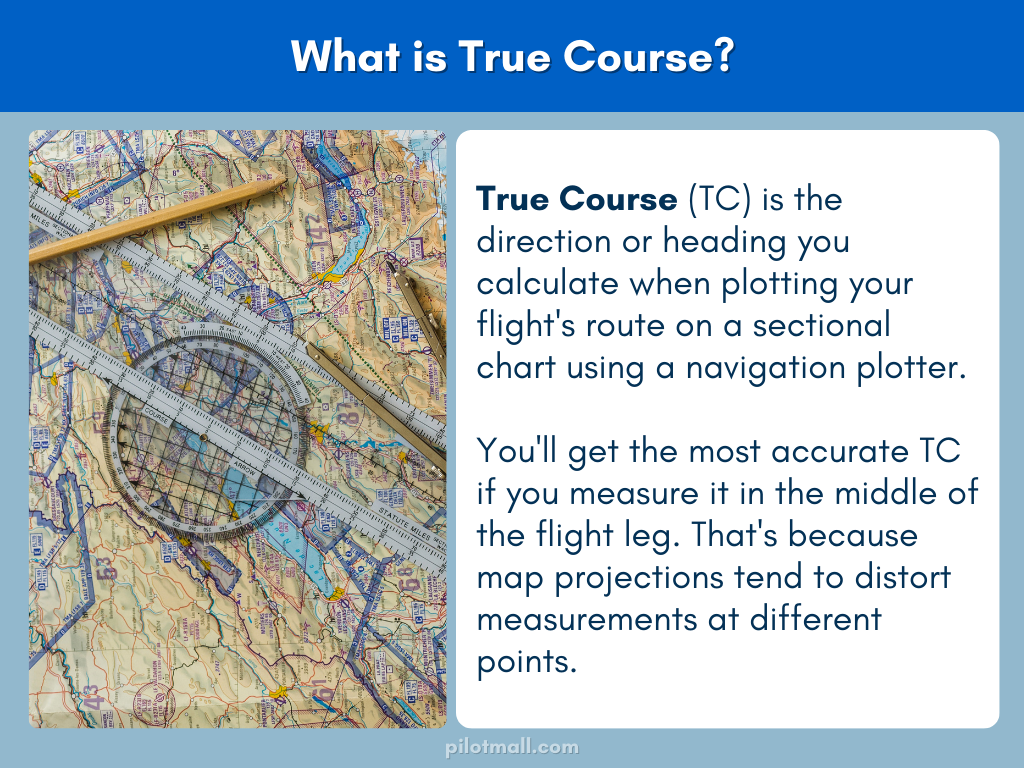
True Course vs True Heading vs (How Are They Different?)

True and Course Courses and Headings in Navigation (Part 1/2
The Difference Between The Two Results From A Crosswind, Which May Require You To Fly A Different True Heading To Achieve Your True Course.
Magnetic Heading Is Your Direction Relative To Magnetic North, Read From Your Magnetic Compass.
It Is Often All You Need To Do, But Sometimes You Are Able To Better.
True Heading (Th) Is The Actual Direction The Vessel Or.
Related Post: